
Skin tag removal is a quick and easy procedure. A controlled electric current removes the tag at its base, without cutting the skin open or stitching it, and a small scab falls away on its own.
If it is clearly a skin tag, you do not need to see a doctor before we remove it at Jade Clinics. If you are not sure what it is, we confirm whether it is a skin tag at a free consultation, in person or by video call. If it looks suspicious to us, we ask you to see a doctor first.
How to Tell a Skin Tag From the Look-Alikes
A skin tag has a mushroom shape: narrow where it meets the skin, with a larger mass sitting on top. It hangs off the skin instead of sitting inside it, and you can move it with a fingertip. That narrow base is what identifies it, and skin cancer looks nothing like it.
- Sunspots are flat and brown, and they are part of the skin rather than something sitting on it.
- Age spots are brown too, thicker than a sunspot, and they sit on the skin like a label stuck on a bottle.
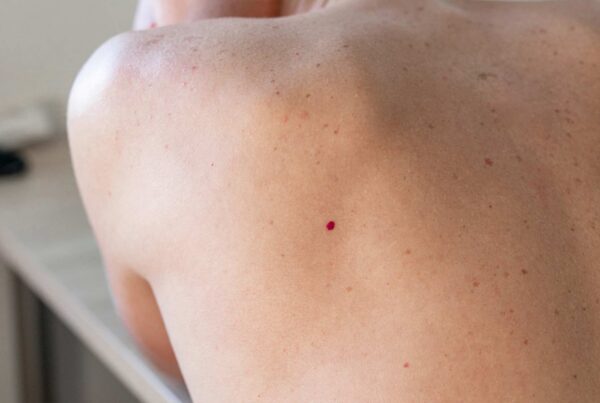
- A cherry angioma is a small red dot that sits flat against the skin.
- Seborrheic keratosis shows up as a rough, raised patch on a broad base.
- A wart sits on a broad base, and the causes of skin warts have nothing to do with friction.
If the spot has changed shape, changed colour, or bled without catching on anything, we ask you to see a doctor before we treat it, and we apply the same rule to mole removal.
Want more articles like this? Get notified and learn more about beautiful skin and hair removal. Subscribe to receive occasional eNews updates from Jade Clinics. Subscribe Now
What Causes Skin Tags
Skin tags form where skin rubs against skin or clothing, in the underarms, in the groin, and under a bra line. A tag catches on a necklace, a bra strap, or a razor, and it bleeds. Skin tags on the neck are the ones people notice first, because they sit where collars and jewellery catch. They are less common in young people and turn up more as skin loosens with age.
What We See in the Clinic: One client had a large skin tag on her wrist for about a decade. She wore a watch over it because it caught on everything and would bleed. We took it off in one session, and at her six-week follow-up the skin looked clear.
Why At-Home Skin Tag Removers Go Wrong
The products sold for skin tag removal at home can injure the skin around the tag. Look up how to get rid of skin tags and the first answers are products: a skin tag removal cream, a skin tag removal kit, a skin tag remover patch, a freeze-off pen, and home remedies such as tea tree oil and apple cider vinegar. Each of those carries a risk of infection, bleeding, irritation, and further injury.
Reported injuries from unapproved mole and skin tag removers include burns, scarring, pain, and ulceration. In one published review, fourteen of the cases involved the face, four of them next to an eye. A cream treats whatever you put it on, skin tag or not.
How We Remove a Skin Tag
We target only the tag, and the skin around it is not affected. We remove it with heat rather than by cutting the skin open, so there is no incision and nothing to stitch. First we make a small cut at the base of the tag, where it meets the skin, so a topical numbing agent takes effect right away. Then we remove the tag slowly with electrocautery, a small and controlled electric current that delivers heat to the tag and cauterizes it at its base, and we reapply the numbing agent as needed. There is a little bleeding, and the heat seals it as the tag comes away. Afterwards we cover the spot with liquid bandage, which seals the forming scab.
Skin tag removal is part of our Skin Revision treatment, which uses the same electrocautery on age spots, benign moles, broken capillaries, and warts. Several tags in one visit take longer, and most removals take between 5 to 45 minutes, depending on the size and the practitioner’s experience. Most skin tags are removed in a single session, and rarely they require a second treatment session.
Jennifer calls it “photoshop in real life,” because the change is visible right away. One client booked in before her 50th birthday to have about ten raised moles removed from her face, ones she had lived with since grade school and been teased about. The appointment took about an hour and a half, and she cried with relief afterwards.
How the Area Heals After Skin Tag Removal
A small scab forms over the treated spot and falls away on its own, usually within one to two weeks.
Jennifer’s insight: The hardest part of healing is doing nothing. The scab protects the new skin while it forms, and picking it off is how a clean result turns into a scar.
Keep the area out of water for 24 to 48 hours, and longer is better. Keep it out of the sun as well. The scab works as a sun block, so the skin underneath is a different shade when it drops off. Complete healing takes several weeks, depending on the size and location of the tag and on how your own skin heals.
The tag we remove rarely comes back. New ones can still form in the same area, because the skin there rubs the same way.
What the Free Consultation Covers
We provide a free consultation before every removal, even when you are certain you want the tag gone. In that appointment we explain what the removal takes, tell you how the area will look afterwards, and go through the procedure and aftercare.
A standard skin tag removal is $100, and a second one in the same visit is $50. A larger tag costs more, and so does a visit where you have several tags removed. The quote also depends on how difficult the removal is, how long the session runs, and who does the work. Your practitioner gives you a quote at the consultation, once they have seen the area. We offer Skin Revision at most of our clinics, so check our locations in BC and Ontario before you book.
”I recently contacted Jade Clinics in Victoria regarding skin tag removal. I am pleased to report that the staff at the clinic were prompt and efficient and secured the background medical information on me, a new patient, in a thorough but courteous manner. I received an appointment for a review of what was required for treatment and a booking for a later appointment. It is also possible to have the initial examination and operation carried out in the initial meeting.
The process took about an hour and a half and, despite numbing gel, was a little uncomfortable at times as the tags are literally burnt off; however, the pain was entirely manageable. For small incisions, liquid bandages are applied: for larger repairs, standard band aids are applied which should be removed the following day, when bleeding stops, and liquid bandages should replace them. In my personal experience, the liquid bandages and scabs disappeared in two weeks. The only cautionary note I would add is that the amount of bleeding in my case was more than expected and care needs to be taken to avoid staining of clothing.
M.C.August 2026
Next Step
Book a free consultation in person or by video call to confirm the spot, talk through treatment and aftercare, and receive a quote.
Common Questions About Skin Tag Removal
Does Skin Tag Removal Hurt?
We numb the area before removing the tag, and most clients feel mild warmth and light pressure rather than pain. Your practitioner checks in with you through the session.
Can Skin Tags Grow Back?
The tag we remove rarely comes back, but new ones can form in the same area, because the skin there still rubs the same way.
Will a Family Doctor Remove a Skin Tag?
Typically no. Many treat a skin tag as cosmetic and decline to remove it. If the spot looks unusual, we still want a doctor to look at it first, whoever removes it in the end.
Can More Than One Skin Tag Be Removed in One Appointment?
Yes. The session takes longer with each added tag. Your practitioner works out the time at the consultation, after counting the tags and seeing where they sit.
Sources:
- HealthLink BC: Removing Moles and Skin Tags – where skin tags sit on the body and why collars and jewellery catch them
- Cleveland Clinic: Skin Tag Removal – the infection, bleeding, irritation, and injury risks of at-home removal products
- Journal of Clinical and Aesthetic Dermatology: Serious Skin Injuries Following Exposure to Unapproved Mole and Skin Tag Removers – the burns, scarring, pain, and ulceration reported after people used unapproved removers