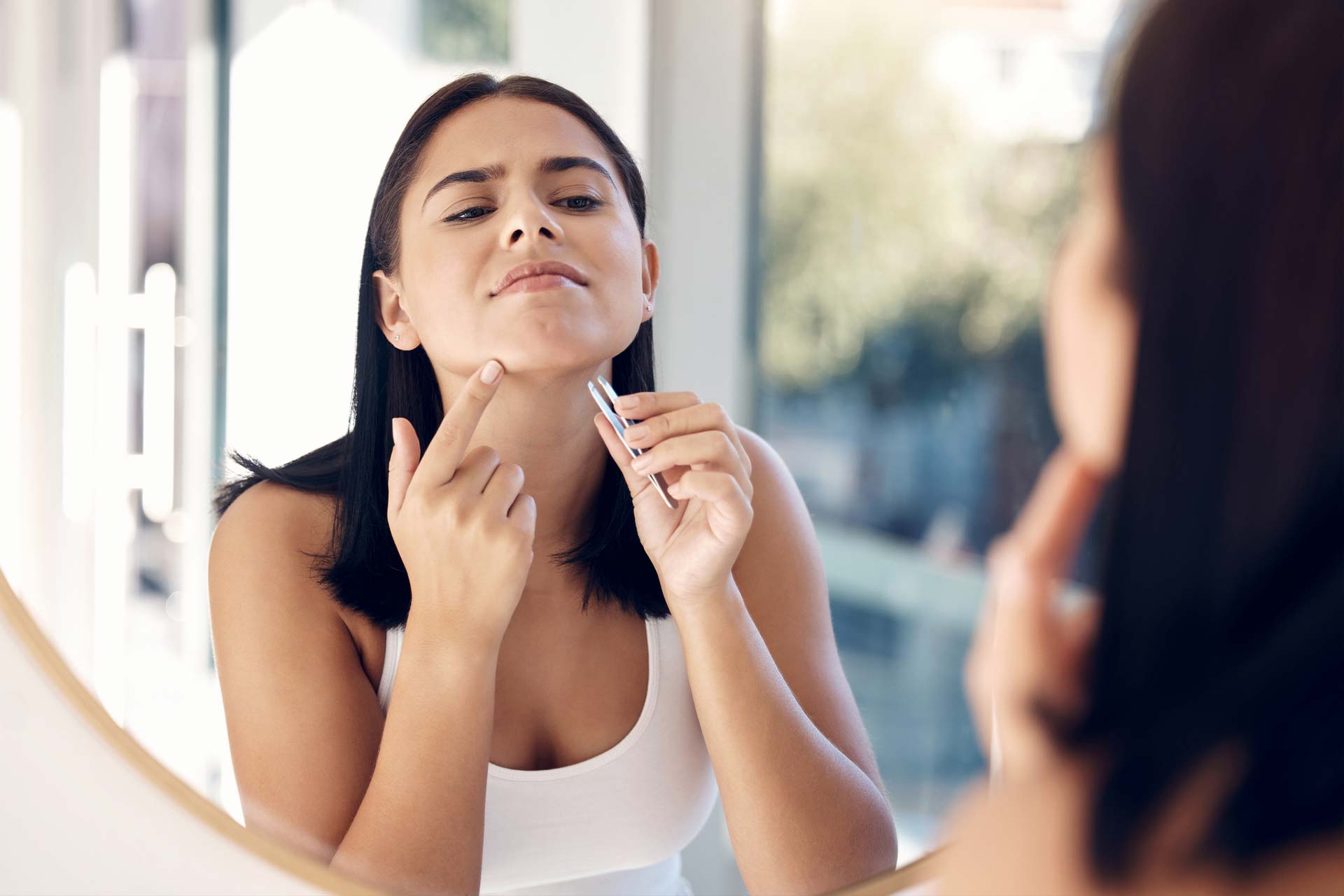
Facial hair in women is usually driven by hormonal changes, and electrolysis is the only method that removes it permanently. The process requires patience, especially for the chin area.
If you are dealing with coarse hair on your chin, jawline, or neck, you are not alone. Unwanted facial hair affects more women and gender-diverse people than most realize, and the emotional toll often runs deeper than the hair itself.
Why Women Get Chin Hair
Hormonal shifts are the most common cause of female chin hair, and a condition called hirsutism affects roughly 5 to 10 percent of women. Hirsutism turns fine vellus hair into thick, terminal hair in areas where women typically have minimal growth: the chin, jawline, upper lip, and neck.
PCOS (polycystic ovary syndrome) is the leading driver, accounting for 70 to 80 percent of hirsutism cases. Other common causes of facial hair in women include menopause, thyroid changes, certain medications, and congenital adrenal hyperplasia. Sometimes no identifiable hormonal cause exists at all, a form called idiopathic hirsutism.
Understanding the cause matters because it shapes the treatment approach. If your chin hair is connected to PCOS and facial hair, ongoing hormonal fluctuations can trigger new growth even during treatment. Menopause-related facial hair in women tends to appear gradually as oestrogen levels drop, while medication-induced growth typically stabilizes once the medication is adjusted.
For many women, the emotional weight is as difficult as the hair itself. Coarse facial hair can trigger shame, anxiety, and questions about identity or femininity. These feelings are valid, common, and not something you need to manage alone. Transgender and gender-diverse clients often face similar challenges with unwanted facial hair, and they deserve the same access to effective, permanent solutions.
Why the Beard Area Is Harder to Treat
The chin and jawline carry some of the densest follicle patterns on the body, making this area more challenging than arms, legs, or the bikini line. Hair in the beard zone is almost always hormone-driven terminal hair: deeply rooted, coarse, and often growing faster than hair elsewhere on the face.
This density also creates more tissue stress during each session. An experienced Electrologist uses a microscope to identify micro-damage invisible to the naked eye, which protects against side effects like scarring and keeps treatment on track. The most common side effect after facial sessions is swelling, which can last up to two weeks. Following proper post-electrolysis care between sessions reduces irritation and supports healing.
A treatment plan for one area takes about 6 to 18 months. Coarse hair grows back every 6 to 8 weeks and can be cleared in about 6 months. Fine hair grows back every 12 to 14 weeks and can take up to 18 months. Some hairs are permanently removed after each session.
Face appointments are every 2 to 3 weeks, so there is less hair to treat and your skin has less to recover from after each session. Your Electrologist estimates the plan after assessing your hair, skin’s response, and appointment schedule.
If hormonal changes are driving new hair growth, maintenance sessions may continue until the underlying cause is managed.
What We See in the Clinic: Many clients arrive after years of daily tweezing, plucking, or waxing their chin hair. That repetitive trauma causes ingrown hairs, scarring, and skin discolouration that can look worse than the hair itself. Some come in feeling hopeless, convinced there is no real solution after other methods failed. Once they stop those habits and begin a proper electrolysis treatment plan, the skin starts to heal. Within a few months, they see both the hair and the skin damage improving together. Regardless of the starting point, there is a path forward.
What Electrolysis for the Chin and Jawline Looks Like
Electrolysis treats each follicle individually by inserting a fine probe and applying a brief electrical current that creates a barrier between the blood supply and the hair seed. Once that connection is severed, the follicle can no longer produce hair. Electrolysis is the only method recognized for permanently removing unwanted hair. The most common technique used at Jade Clinics for face treatment is blend (a combination of galvanic and thermolysis currents), which Jennifer prefers at higher intensity for efficient clearance. For clients with PCOS-driven growth, some Electrologists start with thermolysis (flash) for the first session or two before transitioning to blend.
Because only about 20 to 30 percent of hairs are in the active growth phase at any given time, multiple sessions are needed to reach each follicle during its growth cycle.
Sessions are typically spaced every 2 to 3 weeks. Each appointment treats the visible hair in one focused area, such as the chin or upper lip. Once that area is cleared of visible hair, treatment can move to the next zone. We call this approach “clear and proceed.” A first clearing does not finish the treatment plan: more sessions treat hairs as they grow back over the following months.
Session length depends on the area being treated and case-by-case factors like hair density, pain tolerance, and skin reaction. An initial assessment gives a more accurate estimate, and sessions can range from 1 to several hours. For the chin and jawline, most clients attend electrolysis appointments every 2 to 3 weeks. Clients who follow the treatment plan precisely as recommended by their Electrologist should see a significant decline in both hair quality and quantity within 3 to 6 months.
A chin and jawline treatment plan typically progresses through these stages:
- Early appointments: Treatment focuses on the dense visible growth. Most clients notice a significant reduction in daily growth during this stage.
- As fewer hairs remain: Sessions become shorter, while appointments continue every 2 to 3 weeks.
- Later appointments: Scattered hairs are treated as they return to the active growth phase. Sessions become shorter, and your Electrologist may space appointments further apart.
If hormonal conditions are still active, maintenance may be necessary after the initial treatment plan. Ongoing hormonal fluctuations can cause existing vellus (fine) hair to convert into coarse, terminal hair that requires treatment. Every person is born with all of their hair follicles. Once every follicle in a given area has been treated and the vellus-to-terminal conversion is complete, no new hair will grow in that area.
Jennifer’s insight: It doesn’t matter how bad the situation is. With patience, it can be resolved permanently. Jade Clinics exists today because I had a full beard myself, and the emotional toll I went through is what motivates me to help others in similar situations. I’ve seen every level of severity respond to proper treatment.
What Happens When You Stop Tweezing and Start Treating
Temporary hair removal methods like tweezing, plucking, and waxing traumatize the follicle each time a hair is pulled from the root. Over time, this leads to ingrown hairs, scarring, and darkened skin that often looks worse than the hair. Pulling hair from the root also increases blood supply to neighbouring follicles, which causes surrounding hair to grow back stronger and deeper. Each removal cycle reinforces this effect, gradually converting finer hair into thicker, more visible growth.
Laser hair removal targets pigment, so its effectiveness depends on the contrast between hair and skin colour. Results are often temporary, and for some clients with hormone-driven facial hair, laser can trigger additional visible growth on the face, a response called paradoxical hypertrichosis. Some clients have even tried electrolysis before with a less experienced provider and had poor results, which adds to the feeling that nothing works.
The shift to professional electrolysis changes this pattern. One client came to Jade Clinics after years of daily plucking that had left her chin covered in dark spots and small scars. She was certain the damage was permanent. After four months of consistent electrolysis with no tweezing between sessions, both the hair density and the skin damage had visibly improved. She described it as the first time in years she felt comfortable leaving the house without concealing her chin.
Skin recovery is part of the process. Once the cycle of self-removal stops and proper treatment begins, ingrown hairs clear, discolouration fades, and skin texture evens out.
”Jade electrolysis is very clean, great employees made me feel really comfortable and safe, friendly and caring. the areas of treatment I have had are chin lip eyebrows areola and lower abdomen. I used the skin numbing cream they have at their store(which is cheaper than buying it online or at say a pharmacy...trust me i checked) so it does sting but it's not like a crying pain more like a bee sting or a pric that doesn't last in some areas...I've have tried every type of hair removal with no results.but now with jade and appointments every 3ish weeks I am hair free on my upper lip, nearly done on my chin and halfway done the rest. I am olive skin and was on a lot of prednisone which is a steroid for years and it caused me to get a ton of body hair so that's why I needed it to be dealt with after years of being self conscious I can finally see a bright light. High fives to jade for being so awsome!!!. On a side note if you research them they are the only place that signs papers with you to guarantee results.
Cyreeta L.April 2016
Next Step
If chin hair or other unwanted facial hair is affecting your confidence or daily routine, a free consultation is the simplest way to understand your options. An Electrologist can assess your hair type, density, and any underlying factors to build a treatment plan specific to your situation. You can book at any of our locations across British Columbia and in Ontario.
Common Questions About Chin Hair
Is Chin Hair Normal for Women?
Chin hair is very common in women, especially after puberty, during pregnancy, and around menopause. When growth is limited to a few stray hairs, it is usually a normal response to hormonal fluctuations. When growth becomes dense, coarse, and spreading, a healthcare provider can help determine whether a condition like PCOS is involved.
How Do You Stop Facial Hair Growth in Females Permanently?
Electrolysis is the only method recognized for permanent hair removal. It treats each follicle individually, making it effective regardless of hair colour, skin tone, or the underlying cause of growth.
Does Electrolysis Hurt on the Face?
Sensitivity varies by person and area. The chin and jawline are among the more sensitive zones due to dense nerve endings and thick follicles. Most clients describe the sensation as a brief, tolerable sting. Your Electrologist can adjust intensity and suggest timing strategies to manage discomfort.
Can Tweezing Make Chin Hair Worse?
Yes, tweezing increases blood supply to the surrounding area, which affects hair size and depth. It can also damage existing follicles and cause ingrown hairs, scarring, and skin discolouration. These side effects often make the area look worse over time.
How Long Does Electrolysis Take for the Chin Area?
A treatment plan for one area takes about 6 to 18 months: coarse hair can be cleared in about 6 months, while fine hair can take up to 18 months. Face appointments are every 2 to 3 weeks to limit how much hair is treated and how much skin recovery is needed after each session. Your Electrologist may reduce appointment frequency toward the end as fewer hairs remain. If a hormonal condition causes previously untreated hair to become visible, some follow-up treatment may be needed.
Can Laser Remove Beard-Type Chin Hair?
Laser is not recommended for facial hair because it can cause paradoxical hypertrichosis (increased hair growth) and make the problem worse. Beard-type growth is also the area where many people feel the most frustration, which is why electrolysis is the better long-term fit.
Sources:
- Cleveland Clinic: Hirsutism – Hirsutism affects 5 to 10 percent of women; common causes include PCOS, menopause, and medications
- PubMed: Hirsutism in Polycystic Ovary Syndrome – PCOS accounts for 70 to 80 percent of hirsutism cases
- HealthLink BC: Electrolysis for Removing Hair – Electrolysis permanently removes unwanted hair; it is the recognized method of permanent hair removal