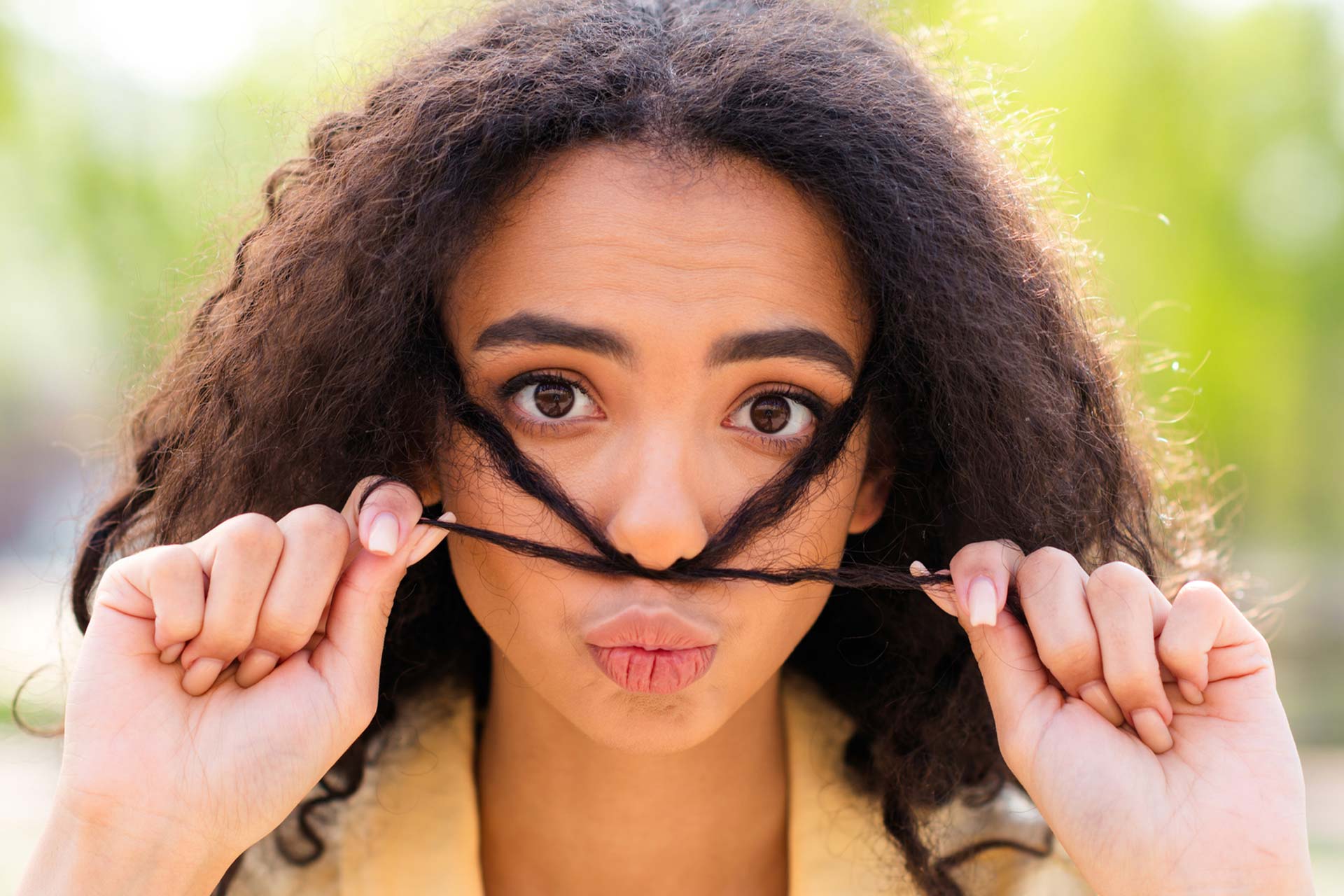
Hormonal imbalances are the most common reason women develop coarse hair in areas typically associated with male-pattern growth: the chin, jawline, sideburns, and neck.
When hair growth connects across these areas, it signals hirsutism rather than typical differences in hair density or hypertrichosis, which is related to ethnic background and appears as generalized increased hair density rather than a hormonal pattern.
What Causes Hormone Hair Growth?
Hair follicles respond directly to androgens: hormones like testosterone and dihydrotestosterone (DHT). Every woman produces some androgens. When levels rise above the normal range, or when follicles become unusually sensitive to normal levels, fine vellus hairs can shift into thick, terminal hairs. The clinical term is hirsutism, and it affects approximately 5–10% of women.
The hair itself can be permanently removed with electrolysis, and in most cases the underlying condition is treatable once identified.
Eight Hormonal Conditions and Causes of Excessive Hair Growth
PCOS and idiopathic hirsutism together account for roughly 90% of cases. The remaining conditions are less common individually, yet each one is important to recognize because the hair growth is often the first visible sign of something deeper.
Polycystic Ovary Syndrome (PCOS)
PCOS is the most common hormonal condition behind excessive hair growth in women. The ovaries produce higher-than-typical levels of androgens, which stimulate terminal hair growth on the face and body. PCOS often comes with irregular periods, weight changes, and acne. If you are dealing with PCOS-related facial hair, a treatment plan combining medical management with permanent hair removal gives the strongest long-term results.
Idiopathic Hirsutism
Some women develop male-pattern hair growth with completely normal hormone levels and regular menstrual cycles. This is called idiopathic hirsutism, and it accounts for roughly half of all mild hirsutism cases. The hair follicles are simply more sensitive to normal circulating androgens, a trait that tends to run in families and is more common among women of Mediterranean and South Asian descent.
Menopause
Menopause does not introduce new androgens. What changes is the balance: as estrogen levels decline, the androgens already present have a relatively stronger effect on hair follicles. Many women notice new chin hair or upper-lip hair during perimenopause or after menopause, and once those follicles have been stimulated, the hair persists even if hormone levels later stabilize.
Cushing’s Syndrome
Cushing’s syndrome occurs when the body produces too much cortisol over a prolonged period. Excess cortisol disrupts the normal hormonal balance and can trigger androgen overproduction, leading to hirsutism alongside other signs such as weight gain concentrated in the face and midsection, thinning skin, and slow wound healing.
Congenital Adrenal Hyperplasia (CAH)
In its non-classic form, congenital adrenal hyperplasia can show up after puberty rather than in early childhood. The adrenal glands make hormones through an enzyme pathway, and a partial defect in that pathway can increase androgen activity enough to cause facial hair, acne, irregular cycles, or fertility concerns.
Adrenal or Ovarian Tumours
Rarely, a tumour on an adrenal gland or ovary can produce large amounts of androgens. These cases typically present with rapid-onset hirsutism: noticeable hair growth developing over weeks or months rather than years, along with other signs like a deeper voice, sudden acne, increased muscle development. Rapid onset is a clinical red flag that warrants prompt medical investigation.
Hyperprolactinemia
Elevated prolactin levels, whether from a small growth on the pituitary gland, certain medications, or thyroid conditions, can contribute to hirsutism. High prolactin causes the body to produce more androgens and reduces the proteins that normally keep those androgens in check, leaving more free testosterone available to stimulate hair follicles.
Hormonal Contraceptives
Starting, stopping, or switching hormonal birth control can shift androgen levels enough to trigger new hair growth or change existing patterns. Some progestins have mild androgenic activity, and discontinuing a pill that was suppressing androgens can unmask hormones causing hair growth that the medication had been keeping in check. The effect varies depending on the specific formulation and individual hormone sensitivity.
What We See in the Clinic: Most women who come to us with hormonal hair growth have spent years thinking they are alone in this. They are not. Hormonal hair growth is far more common than most people realize, and the range of underlying causes means it can appear at any age.
If you’re already on or considering hormone replacement therapy, see how different types of HRT affect hair growth and what electrolysis can do for hair that HRT won’t reverse.
How to Tell If Your Hair Growth Is Hormonal
The location and pattern of the hair are the strongest clues. Hormones causing excessive hair growth concentrate it in androgen-sensitive areas: the chin, jawline, sideburns, neck, chest, and lower abdomen. When growth connects across the beard area, it is a strong indicator of hirsutism rather than typical ethnic or genetic differences.
Other signs that point to a hormonal cause include:
- Gradual increase in hair coarseness and density over months or years
- Irregular or absent menstrual periods
- Acne that persists past adolescence or returns in adulthood
- Thinning hair on the scalp alongside thickening facial or body hair
- Unexplained weight changes
- Masculinization (deepening of the voice, increased muscle mass, or changes in body fat distribution)
- Infertility or recurrent pregnancy loss, which can result from the same hormonal imbalances that drive hair growth
If the growth appeared suddenly and progressed rapidly, that pattern suggests a different level of urgency and should be evaluated by a doctor promptly.
”I’ve been seeing Michelle for electrolysis treatments for five months now for hirsutism and have noticed a huge reduction and thinning in hair near my face, chin and neck. I went from having to shave course dark hair every 2-3 days to now only needing a small touch up once a week. This has done wonders for my self-confidence.
Michelle educated me every step of the way and I am confident that the results will only continue to improve. Michelle is kind and professional and also funny which makes sessions breeze by. I love that she plays music and always gives me the option to stream Netflix.
Echoing what another reviewer wrote, I too wish I had found Jade Clinics sooner as I now know laser is not a permanent solution to hirsitism.
Thank you so much Michelle, Jenn and Kat for your top tier services!
Miriam D.December 2025
Why Electrolysis Works for Hormone-Related Hair Growth
Temporary methods like shaving, waxing, and threading remove the hair temporarily, and it returns because the growth structure is intact. Electrolysis works differently: it creates a barrier between the blood supply and the hair seed, which means the treated follicle can no longer produce hair. This is why electrolysis is recognized as the only permanent hair removal method, a distinction no other method holds.
For women with ongoing hormonal conditions, this matters especially. Even when hormones continue to fluctuate, electrolysis addresses the hair that has already been stimulated. This is where electrolysis and laser hair removal differ most: laser may reduce hair temporarily, yet hormonal fluctuations can reactivate follicles that were only suppressed. Electrolysis treats each follicle individually and permanently, regardless of ongoing hormonal changes.
Jennifer’s Insight: Think of hair growth like a plant. Put a plant in a closet and water it, it will not grow. Put the plant in the sun with no water, it will not grow either. You need both for growth. Hair works the same way: hormones are the sun, and blood supply is the water. Most clients with hormonal conditions are told there is nothing they can do about the hair. While electrolysis cannot influence the hormonal condition itself, it stops the blood supply to the hair follicle, removing one of the two requirements for growth, permanently.
Getting Diagnosed: Why It Matters Beyond the Hair
The hair itself can be permanently removed with electrolysis regardless of whether the underlying condition has been diagnosed. Still, diagnosis matters for a larger reason: every hormonal condition on this list carries health impacts well beyond unwanted hair.
PCOS affects fertility, metabolic health, and cardiovascular risk. Cushing’s syndrome leads to bone loss and muscle weakness. CAH requires ongoing hormone management. Hyperprolactinemia (abnormally high levels of the hormone prolactin in the blood) can signal a pituitary issue that affects vision and bone density. Even menopause-related hormonal changes benefit from medical oversight to support bone health and overall wellbeing.
Many women feel ashamed of hormonal hair growth and carry the weight of thinking something is wrong with them. Nothing is. These are medical conditions, and the hair is a visible symptom, not a personal failing. Seeking a diagnosis and treatment is a practical step that addresses both the symptom and the root cause. You are not alone in this, and there is a path forward.
Next Step
If you are unsure whether hormones are causing your hair growth, a free electrolysis assessment is a practical starting point. During the consultation, we evaluate the growth pattern and, if it suggests an underlying condition, recommend seeing a specialist for diagnosis.
Jade Clinics has locations across British Columbia and Ontario for in-person consultations, and addressing hormones causing hair growth starts with understanding the pattern.
Common Questions About Hormone Hair Growth
Can Hormonal Imbalance Cause Facial Hair Growth?
Yes. In most cases, the issue comes down to higher androgen activity or follicles that are more sensitive to androgens. That is why the growth often shows up in the same upper-lip, chin, sideburn, and neck pattern.
Does Estrogen Cause Unwanted Hair Growth?
Estrogen itself does not cause unwanted hair growth. The opposite is true: estrogen helps keep androgen effects in check. During menopause, declining estrogen allows existing androgens to have a stronger relative effect on hair follicles, which is why many women notice new facial hair during or after the menopausal transition.
Does Electrolysis Get Rid of Hormonal Hair?
Yes. Electrolysis is the only method recognized for permanent hair removal. It works by creating a barrier between the blood supply and the hair seed, so the treated follicle can no longer produce hair. This is effective even when the underlying hormonal condition is still active.
Does Electrolysis Work If My Hormones Are Still Imbalanced?
Electrolysis permanently removes each treated hair regardless of hormonal status. If your hormones remain imbalanced, your body may stimulate new follicles over time, which means additional sessions may be needed for new growth.
How Do I Know If My Hair Growth Is Hormonal?
The strongest indicator is location: coarse hair concentrated on the chin, jawline, sideburns, neck, chest, or lower abdomen follows a hormonal pattern. If the growth connects across the beard area, it is very likely hirsutism. A doctor can confirm through blood tests measuring androgen levels, and an Electrologist can assess the growth pattern during a consultation.
Sources:
- National Library of Medicine: Hirsutism – StatPearls – Hirsutism prevalence (5–10% of women) and that PCOS plus idiopathic hirsutism account for approximately 90% of cases
- Mayo Clinic: Hirsutism – Symptoms and Causes – Declining estrogen during menopause strengthens androgen effect on hair follicles
- HealthLink BC: Electrolysis for Removing Hair – Electrolysis is recognized as a permanent hair removal method