For most people weighing microneedling vs laser, RF microneedling is the safer choice for skin rejuvenation. It rebuilds skin from the inside out, with minimal downtime.
Laser resurfacing works by creating surface trauma first. The practical question is whether that downtime and risk are worth it when RF microneedling can work from the inside out.
What’s the Difference Between Microneedling and Laser?
Microneedling and laser resurfacing differ in direction: laser works from the outside in, removing or heating the surface of your skin, while microneedling works from the inside out, triggering your body’s own repair response. That single difference drives the practical trade-offs you compare next: downtime, side effects and how results develop.
Laser resurfacing treats skin by damaging it on purpose, and the skin you see afterwards is the product of that healing process. Microneedling takes the opposite path: fine needles create micro-channels your body treats as a signal to produce fresh collagen, so renewal happens beneath the surface. The modern version we use, RF microneedling, adds radiofrequency energy to reach the deeper layers where meaningful renewal happens.
Both treatments aim at the same goal, new collagen: the structural protein that keeps skin firm, smooth and resilient. The choice between RF microneedling or laser is really about how that collagen gets made.
How Laser Resurfacing Actually Works
Laser resurfacing uses concentrated light energy to remove the outer layer of your skin and heat the layer underneath, forcing the skin to rebuild after deliberate damage. Fractional laser resurfacing softens this by treating narrow columns of skin and leaving surrounding tissue intact, and IPL (intense pulsed light), often offered alongside it, uses pulses of broad-spectrum light to target pigment and redness rather than removing skin.
Recovery is the part that surprises people most. Healing after ablative CO2 laser resurfacing can take up to two weeks, and the redness that follows can linger for two to three months. During the first stretch, treated skin is raw and swollen before it scabs and peels.
Laser resurfacing side effects go beyond the planned recovery. The recognized risks of laser surgery include pain, infection, bleeding, scarring and changes in skin colour. The radiation involved is non-ionizing light rather than the ionizing kind used in X-rays, so the documented concerns are thermal: burns, blistering and pigment changes, and people with darker skin tones are often steered away from aggressive settings.
What We See in the Clinic: A client recently came to us days after a laser resurfacing treatment at another provider. Her whole face was red, inflamed and swollen. Nothing about her case was unusual: that recovery is the expected price of working on the skin from the outside in.
Want more articles like this? Get notified when they’re published. Subscribe to receive occasional eNews updates from Jade Clinics. Subscribe Now
How RF Microneedling Works
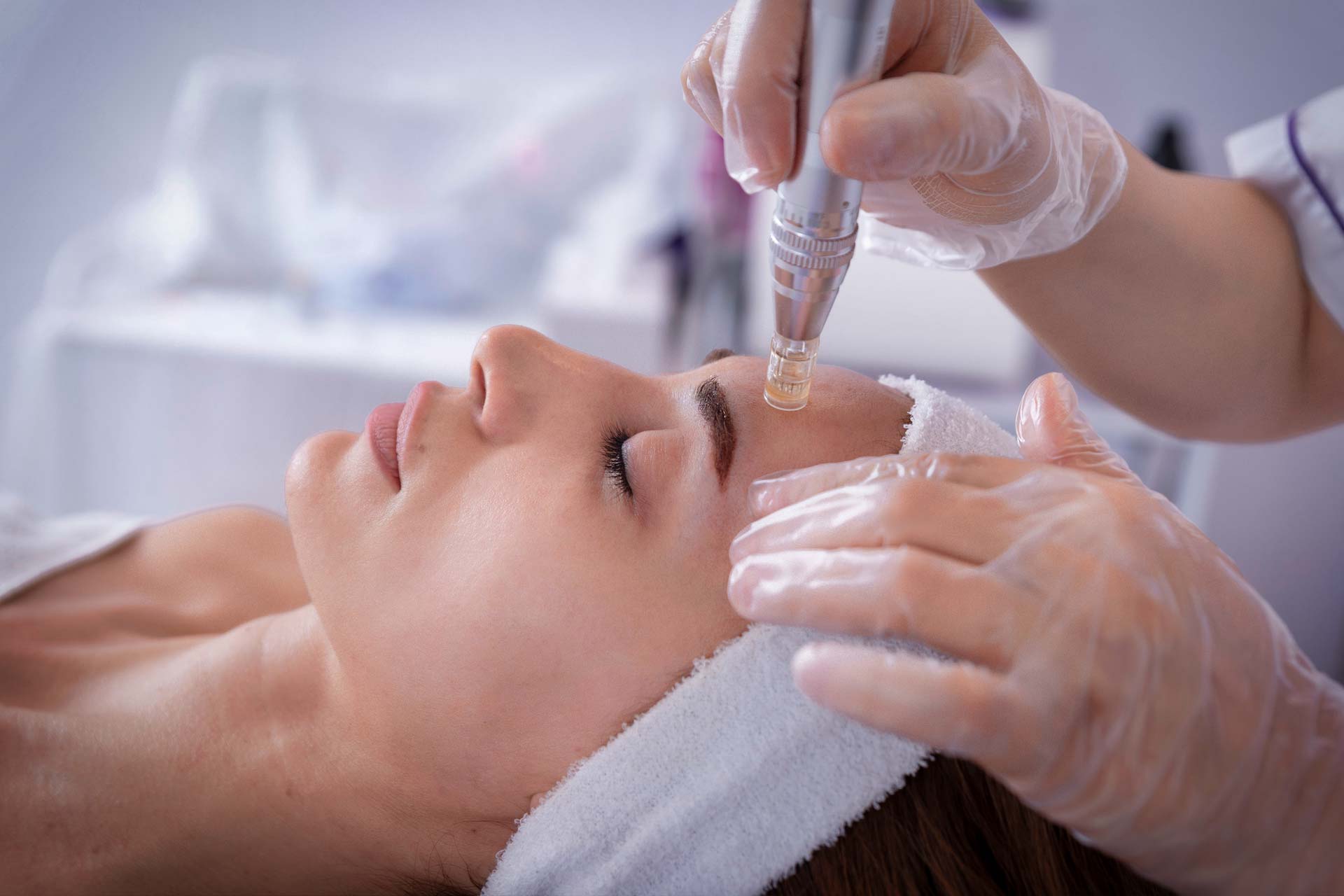
RF microneedling pairs ultra-fine needles with radiofrequency energy, so collagen production gets triggered well below the surface. Traditional microneedling, also called collagen induction therapy, stimulates the skin’s own wound-repair cascade, prompting fibroblasts to produce new collagen and elastin.
RF microneedling goes a meaningful step further: the needles deliver controlled radiofrequency heat directly into the dermis, remodelling skin at depths standard needling cannot reach. One RF microneedling session delivers results comparable to roughly five traditional microneedling sessions, with minimal downtime. We deliver RF microneedling with Secret RF by Cutera, a platform that adjusts needle depth and energy to suit each client’s skin and goals.
A session takes about 20 minutes after numbing cream, with mild heat and pressure rather than pain. Most clients return to normal activities the same day, with redness that typically settles within 24 hours. The first treatments are scheduled closer together. After the initial series, we usually recommend about three sessions a year.
”Had my Secret RF series with Michelle. I’ve seen visible improvements with the texture of my facial skin and a reduction of the loose skin on my neck area specifically. I’m definitely thrilled with the results so far and I’m now considering getting other areas treated. And again, thank you Michelle for being the caring professional that you are.
Ann H.March 2024
RF Microneedling vs Laser for Acne Scars, Wrinkles, and Pigmentation
Both RF microneedling and laser can improve acne scars, wrinkles and pigmentation; the difference is how much recovery you accept and how predictable the result is for your skin tone.
For acne scars, RF microneedling excels at textural correction because the needles and heat remodel the scar tissue itself. Deeper or more complex scars typically take six to nine treatments. Laser can also improve scarring, with a higher risk of pigment changes on medium and darker skin tones.
For wrinkles and skin laxity, the radiofrequency depth matters most. RF microneedling treats jowls, smile lines, the lines between the eyebrows and general loss of firmness by rebuilding collagen and elastin in the deeper tissue where those changes start.
For pigmentation and pores, each tool works differently. IPL targets pigment directly, so it can clear sun spots quickly when your skin tone suits it. RF microneedling vs laser for pigmentation tilts toward RF microneedling on darker skin, since it does not target pigment at all. The answer on RF microneedling vs laser for pores is similar: gradual remodelling tightens enlarged pores, evens texture and brightens dull skin. Results build over months, and how long microneedling results last depends on your skin, sun exposure and maintenance plan.
Which One Should You Choose?
Choose RF microneedling. For the concerns most readers compare these treatments on, acne scars, wrinkles, laxity and pigmentation, RF microneedling does the same structural work without the weeks of recovery, the side-effect profile, or the pigment-change risk that laser resurfacing carries.
Jennifer’s insight: Laser, in general, is used to destroy things: surgeons use it to cut away tissue and remove tumours. I would never choose laser resurfacing for my own skin. Why accept a treatment with significant contraindications when an alternative with minimal risk can get you there naturally?
Jennifer knows both sides: she trained in traditional microneedling more than two decades ago, and today she has Secret RF treatments on her own face and neck two to three times a year.
Side by side, the practical differences:
| Factor | RF Microneedling | Laser Resurfacing |
|---|---|---|
| How it works | Inside out: your collagen response, boosted by radiofrequency heat | Outside in: removes or heats the surface so skin must heal |
| Recovery | Minimal; most clients resume normal activities the same day | Up to two weeks, with redness that can last months |
| Sessions | Initial sessions closer together, then about three sessions a year | Often one aggressive treatment, or several lighter passes |
| Skin tones | Suitable for most skin tones | Pigment-change risk rises with darker skin tones |
Pricing for both varies with the area treated, treatment depth and provider expertise. Laser resurfacing is typically the larger per-session investment, while RF microneedling spreads cost across a short treatment plan. Exact pricing is case-by-case and confirmed at your consultation.
Next Step
When you are ready to compare these treatments against your own skin and goals, book a free consultation at any Jade Clinics location that offers microneedling. A practitioner will assess your skin and tell you what RF microneedling can and cannot do for you.
Common Questions About RF Microneedling vs Laser
Is Microneedling Safer Than Laser Resurfacing?
For most people and most skin tones, yes. RF microneedling works with your body’s healing response, so the main after-effect is short-lived redness. Laser resurfacing side effects can include burns, pigment changes, infection and scarring, and the risk rises with darker skin tones and more aggressive settings.
Which Costs More: Microneedling or Laser?
Laser resurfacing is usually the larger per-session investment, while RF microneedling is priced across a short treatment plan. The cost of RF microneedling vs laser depends on the area treated, treatment depth and your provider. We confirm exact pricing during the free consultation.
How Long Is Laser Resurfacing Downtime?
Ablative CO2 laser resurfacing can take up to two weeks to heal, and redness can persist for two to three months afterwards. By comparison, most RF microneedling clients return to normal activities the same day.
Can RF Microneedling Treat Acne Scars as Well as Laser?
For most textural acne scarring, yes. The needles and radiofrequency heat remodel scar tissue directly, and deeper scars typically respond over six to nine treatments. You get gradual, cumulative improvement without a two-week recovery after each session.
Sources:
- Cleveland Clinic: Laser Skin Resurfacing – recovery after ablative CO2 laser resurfacing can take up to two weeks, with redness lasting two to three months afterwards.
- FDA: Medical Lasers – laser surgery uses non-ionizing radiation, and its recognized risks include pain, infection, bleeding, scarring and changes in skin colour.
- PMC: Physiological Mechanisms and Therapeutic Applications of Microneedling – microneedling stimulates the skin’s intrinsic wound-repair cascade, prompting fibroblasts to produce new collagen and elastin.